Florida welcomed over 140 million visitors in recent years, a number that puts it shoulder-to-shoulder with entire countries in annual tourism volume. That figure isn’t driven by one mega-park or a single stretch of coastline. It reflects something broader: a state where nearly every county gives someone a reason to show up.
An attraction, at its core, is any place that draws visitors by providing something of interest or pleasure. By that measure, Florida overdelivers. A retiree kayaking through bioluminescent waters in the Indian River Lagoon and a five-year-old meeting characters at Walt Disney World are both responding to the same pull, just from opposite ends of the spectrum. The state covers theme parks, wildlife preserves, historic landmarks, springs, art districts, and stretches of sand that rival Caribbean beaches.
Most Florida guides rehash the same ten Orlando parks. This one is structured differently.
This guide organizes 50+ Florida attractions across five distinct regions:
- North Florida including Jacksonville, St. Augustine, and the Panhandle
- Central Florida covering Orlando, Tampa, and the I-4 corridor
- South Florida spanning Miami, the Everglades, and the Keys
- Gulf Coast from Naples and Sarasota up through Clearwater
- Atlantic Coast featuring Palm Beach, Fort Lauderdale, and the Space Coast
Each region breaks down by traveler type, so families with toddlers aren’t sifting through nightlife recommendations, and couples aren’t wading through waterpark reviews.
You’ll also find details most competitors skip: budget tiers (including free and under-$20 options), lesser-known spots that don’t appear on typical top-ten lists, nature-focused attractions for visitors who want zero screen time, and accessibility notes for travelers with mobility considerations.
What Are the Best Attractions in Central Florida?
Central Florida’s best attractions span Walt Disney World, Universal Orlando Resort, Kennedy Space Center, and dozens of natural springs and gardens within a 90-minute driving radius.
The Orlando metro area accounts for roughly 75 million annual visitors, according to Visit Orlando’s tourism reports, making it the most visited destination in the United States. That concentration of foot traffic exists because Central Florida packs a remarkable density of things to do into a relatively compact geography.
The headline acts include four parks that need little introduction:
- Walt Disney World operates four distinct theme parks (Magic Kingdom, EPCOT, Hollywood Studios, Animal Kingdom) plus two water parks across 25,000 acres in Lake Buena Vista
- Universal Orlando Resort draws massive crowds to its three parks, including Universal Epic Universe, which opened in 2025
- SeaWorld Orlando combines marine life exhibits with roller coasters like Mako and Pipeline: The Surf Coaster
- LEGOLAND Florida in Winter Haven targets the 2-to-12 age bracket with over 50 rides and a dedicated water park
Reducing Central Florida to its theme parks misses more than half the picture. Some of the region’s most memorable experiences sit entirely outside the turnstiles.
Kennedy Space Center Visitor Complex on Merritt Island puts you within viewing distance of active launch pads. Watching a SpaceX Falcon 9 lift off from the Saturn V Center grandstand is a fundamentally different experience than watching it on a screen. ICON Park on International Drive offers the Orlando Eye observation wheel (400 feet up) alongside restaurants and midway-style attractions. Old Town Kissimmee runs a free weekly classic car cruise every Saturday night. Gatorland, open since 1949, remains one of the best places to see American alligators and crocodiles up close for under $35.
For a full breakdown of attractions and activities in the Orlando area that go beyond the usual theme parks, the options stretch well beyond this list.
The lesser-known spots often deliver the strongest memories. Bok Tower Gardens in Lake Wales features a 205-foot Art Deco carillon tower surrounded by 250 acres of gardens designed by Frederick Law Olmsted Jr. Blue Spring State Park in Orange City becomes one of the largest manatee gathering sites in Florida between November and March, with 700+ manatees documented in peak weeks. Wekiwa Springs State Park sits just 30 minutes north of downtown Orlando and offers crystal-clear 72°F spring water for swimming year-round.
If you’re visiting Central Florida between late February and early March, the Florida Strawberry Festival in Plant City draws over 500,000 attendees across 11 days. It combines agricultural exhibits, live country music headliners, and fresh strawberry shortcake that people drive hours for. Check the detailed schedule and lineup for the 2026 festival to plan your visit.
Practical timing and pricing tips for Central Florida parks:
- Best months to visit: September through November brings noticeably lower crowds and temperatures that dip from summer’s 95°F peaks into the mid-80s. School is in session, wait times at major parks drop by 30-40%, and hotel rates often fall 20-25% compared to June or July.
- Ticket price ranges (2025-2026 estimates): Walt Disney World single-park tickets start around $109 on value days and climb past $189 on peak dates. Universal Orlando runs $119-$174 for single-park access. SeaWorld Orlando starts near $80 online. LEGOLAND Florida hovers around $95-$110.
- Budget-conscious move: Fun Spot America parks in Orlando and Kissimmee offer free admission with pay-per-ride options or affordable wristband packages, plus free parking. Rides like the White Lightning wooden coaster and the Freedom Flyer suspended coaster compete with experiences at parks charging three times the price.
Central Florida’s real advantage isn’t any single park. It’s the fact that a family can spend a morning with manatees at Blue Spring, eat lunch in Winter Garden’s historic downtown, and still make it to a theme park by 4 PM. That kind of range, packed into a one-hour drive, doesn’t exist anywhere else in the country.
How to Explore South Florida’s Top Tourist Spots
South Florida’s top tourist spots stretch from Miami’s art districts to the Dry Tortugas, covering UNESCO sites, coral reefs, and historic architecture across a 200-mile corridor.

Miami alone could fill a week-long itinerary without repeating a single neighborhood. The Vizcaya Museum and Gardens, a 1916 Italian Renaissance-style villa on Biscayne Bay, draws roughly 300,000 visitors annually. Pérez Art Museum Miami (PAMM) anchors the city’s contemporary art scene with rotating exhibitions and a waterfront sculpture garden that most visitors discover by accident while walking the baywalk. A few miles north, the Wynwood Walls transformed a former warehouse district into one of the largest open-air street art installations in the world, with murals from artists across 50 countries refreshed during Art Basel week each December.
South Beach’s Art Deco Historic District deserves more than a quick drive-by. The roughly 960 pastel-colored buildings between 5th and 23rd Streets represent the largest collection of Art Deco architecture on the National Register of Historic Places. Walking it at dusk, when the neon lights switch on, is a completely different experience than a midday stroll.
South Florida is a year-round destination, but the most comfortable window falls between December and March, when humidity drops and temperatures hover in the mid-70s. Summer visitors should expect afternoon thunderstorms almost daily and plan outdoor activities for mornings.
About 45 minutes southwest of Miami, Everglades National Park operates on a different clock entirely. This UNESCO World Heritage Site spans 1.5 million acres of sawgrass marshes, mangrove forests, and subtropical wilderness. Airboat tours are the signature experience, but they’re only permitted in certain areas outside the park’s official boundaries. Inside the park itself, kayaking the Nine Mile Pond trail or walking the Anhinga Trail for guaranteed alligator and wading bird sightings tends to be more rewarding than the louder alternatives.
The Florida Keys chain stretches 113 miles from Key Largo to Key West, and each key has a distinct personality:
- John Pennekamp Coral Reef State Park (Key Largo): The first undersea park in the U.S., with snorkeling tours to the Christ of the Abyss statue submerged in 25 feet of water
- Bahia Honda State Park (Big Pine Key): Consistently ranked among the top beaches in the country, with calm, shallow water ideal for families
- Key West: Dry Tortugas National Park (accessible only by ferry or seaplane, 70 miles offshore), the Ernest Hemingway Home and Museum with its famous six-toed cats, and Duval Street’s two-mile stretch of bars, galleries, and live music
For a deeper look at the diverse activities and historic sites to explore in Key West, the island packs a surprising amount of history and outdoor activity into just four square miles.
Skipping Fort Lauderdale to head straight to Miami or the Keys is a common mistake. Fort Lauderdale’s Bonnet House Museum and Gardens, a 35-acre estate built in 1920, sits hidden behind high-rises on the barrier island and houses a collection of ornamental monkeys, swans, and native wildlife alongside art and architecture. Las Olas Boulevard connects the beach to downtown with independent galleries, restaurants, and shops that feel nothing like a tourist strip. Hugh Taylor Birch State Park, sandwiched between the Intracoastal Waterway and the Atlantic Ocean, offers kayak rentals, a freshwater lagoon, and coastal hammock trails within walking distance of the hotel district.
(One thing most first-timers don’t realize: driving from Miami to Key West takes about 3.5 hours without stops, but the Seven Mile Bridge and roadside seafood shacks make it a full-day affair if you let them.)
Why Florida’s Gulf Coast Has the Most Underrated Attractions
Florida’s Gulf Coast stretches from Tampa Bay to Naples, offering world-class museums, top-ranked beaches, and wildlife sanctuaries that consistently draw fewer crowds than Central Florida parks.
Conventional wisdom says to center a Florida trip around Orlando’s theme parks, but the Gulf Coast often delivers equally memorable experiences at lower cost and with significantly shorter wait times. Tampa Bay alone holds four major attractions within a 20-minute driving radius, and most visitors can experience all of them in a long weekend without fighting for parking at 6 a.m.
Tampa Bay anchors the Gulf Coast’s family-friendly attraction scene with a variety of parks and cultural sites that surprise first-time visitors:
- Busch Gardens Tampa combines African wildlife encounters with roller coasters like SheiKra, a 200-foot floorless dive coaster that remains one of the most intense rides in the Southeast.
- The Florida Aquarium in the Channelside district houses over 7,000 aquatic animals and runs wild dolphin cruises in Tampa Bay.
- ZooTampa at Lowry Park earned a spot on TripAdvisor’s list of top U.S. zoos, with its Florida Manatee Critical Care Center treating injured manatees year-round.
- Tampa Riverwalk a 2.6-mile paved waterfront path, connects museums, restaurants, and public art installations from Armature Works to the Convention Center
Sarasota punches above its weight. Siesta Key Beach has been rated the number one beach in the United States by Dr. Beach (Stephen Leatherman’s annual coastal survey), and its quartz-crystal sand stays cool underfoot even in July.
Beyond the shoreline, The Ringling Museum complex spans 66 acres of art galleries, historic theaters, and a circus museum built from John Ringling’s personal collection. Mote Marine Laboratory, a working research facility open to the public, lets visitors observe shark research and sea turtle rehabilitation up close.
For a full rundown of must-visit attractions and cultural highlights in Sarasota, the city fills a solid two-day itinerary on its own.
Farther south, Naples and Fort Myers trade theme-park energy for something quieter and more restorative. The Edison and Ford Winter Estates preserve the adjacent winter homes of Thomas Edison and Henry Ford along the Caloosahatchee River, with Edison’s original botanical laboratory still intact.
Naples Botanical Garden covers 170 acres across themed gardens representing ecosystems from Brazil to Southeast Asia. Corkscrew Swamp Sanctuary, managed by the National Audubon Society, protects one of the largest remaining stands of old-growth bald cypress in North America, with some trees exceeding 500 years old.
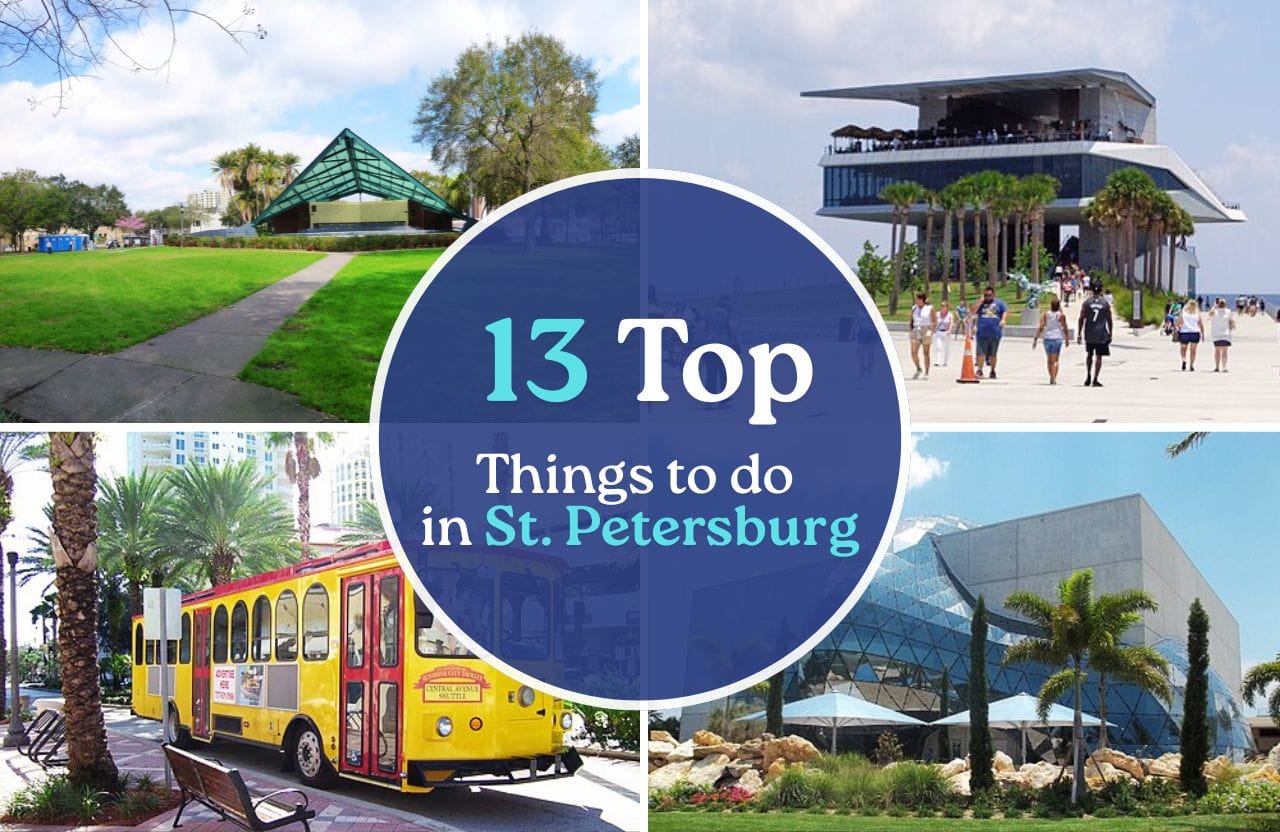
St. Petersburg rounds out the Gulf Coast corridor with a cultural density that rivals cities three times its size. The Salvador Dalí Museum holds the largest collection of Dalí’s work outside Spain, including seven of his 18 recognized masterpiece paintings.
Sunken Gardens, a 100-year-old botanical garden tucked into a former sinkhole, grows over 50,000 tropical plants on just four acres. Fort De Soto Park, spread across five interconnected islands, offers kayaking, camping, and some of the best shelling on Florida’s west coast.
Gulf Coast attractions don’t require the advance booking, surge pricing, or physical endurance that a Central Florida theme park week demands. The trade-off is a slower pace, but for many travelers, that’s the entire point.
What Are the Best Florida Landmarks in North Florida and the Atlantic Coast?
North Florida and the Atlantic Coast hold the state’s oldest European landmarks, pristine national seashores, and coastal towns where hotel rates run 30-50% below Central Florida averages.

Most traveler’s fly into Orlando or Miami and never drive north. That’s a missed opportunity. North Florida contains the densest concentration of pre-colonial and colonial-era history in the entire state, paired with beaches that rarely feel crowded even during peak season.
Jacksonville
As Florida’s largest city by land area, Jacksonville spreads across both sides of the St. Johns River and offers a surprising range of cultural and outdoor activities to explore.
The Cummer Museum of Art & Gardens houses over 5,000 works spanning from 2100 BCE to the present, displayed alongside formal gardens that step down to the riverbank.
Jacksonville Zoo and Gardens, the only walking safari in Northeast Florida, covers 122 acres and features a rare manatee exhibit alongside African veldt habitats.
Fort Caroline National Memorial sits on the south bank of the St. Johns River, marking where French Huguenots established one of the earliest European settlements in North America in 1564.
Atlantic Beach, just 20 minutes east of downtown, delivers a laid-back surf town atmosphere without the commercial density of Daytona or Cocoa Beach.
St. Augustine
Built in 1672, Castillo de San Marcos is the oldest masonry fort in the United States. Its coquina walls (made from compressed shells) actually absorbed cannonball impacts rather than shattering, which is why the fort survived multiple sieges that would have destroyed brick or stone structures. Walking through the casemates and climbing to the gun deck takes about 90 minutes.

Two blocks south, Flagler College occupies the former Hotel Ponce de León, a Spanish Renaissance building commissioned by railroad magnate Henry Flagler in 1888. The dining hall alone, with its Tiffany stained glass windows and hand-painted murals, justifies the guided tour fee.
St. Augustine Lighthouse, built in 1874 and still operational, rewards the 219-step climb with panoramic views of the Matanzas Inlet and barrier islands.
Amelia Island
Fort Clinch State Park occupies the northern tip of Amelia Island, where a remarkably intact Civil War-era brick fort overlooks the Cumberland Sound. Rangers in period uniforms conduct first-person living history programs on the first weekend of each month.
Historic downtown Fernandina Beach, just south of the fort, runs along Centre Street with Victorian architecture, independent restaurants, and a shrimp boat fleet that still operates commercially.
Atlantic Coast Highlights
The stretch from Daytona Beach south to Cocoa Beach covers three distinct experiences:

- Daytona Beach Boardwalk: Amusement rides, arcades, and a bandshell that hosts free summer concerts, all within walking distance of the beach where cars can still drive on the sand along designated sections
- Canaveral National Seashore: 24 miles of undeveloped barrier island beach, making it the longest stretch of undeveloped coast on Florida’s Atlantic side, with sea turtle nesting sites active from May through October
- Cocoa Beach Pier: An 800-foot fishing pier with restaurants and surf shops that serves as the gateway town for Kennedy Space Center visitors (the entrance is only 20 minutes north)
Travelers who skip North Florida entirely miss the state’s oldest city, its most historically significant forts, and beaches where parking is free and towel space is never an issue. Hotel rates in St. Augustine and Jacksonville Beach frequently land between $120 and $180 per night during spring and summer, compared to $250 or more for comparable rooms near Orlando’s parks.
Which Florida Attractions Are Best for Families, Couples, and Budget Travelers?
Florida’s best attractions split cleanly by traveler type, with families gravitating toward Central Florida theme parks, couples toward Gulf Coast culture, and budget travelers toward the state’s 175 state parks.
No single Florida itinerary works for every group. A couple seeking a quiet weekend in Naples will have a miserable time navigating stroller traffic at a mega theme park, and a family with three kids under ten won’t get much from a wine tasting afternoon.
Matching attractions to your travel style saves both money and frustration.
| Traveler Type | Top Picks | Typical Price Range | Best Region |
|---|---|---|---|
| Families with kids | Walt Disney World, LEGOLAND, Zoo Miami, Florida Aquarium | $25-$130 per person | Central Florida, South Florida |
| Couples and adults | Wynwood Walls, Dalí Museum, Key West sunset sailing | Free-$85 per person | South Florida, Gulf Coast |
| Budget travelers | State parks, free beaches, museum free days | Free-$10 per vehicle | Statewide |
| Solo travelers and seniors | Bok Tower Gardens, Morikami Gardens, Silver Springs | $6-$15 per person | Central Florida, Atlantic Coast |
The biggest takeaway from this breakdown isn’t which attractions top each list.
It’s that Florida’s most memorable experiences (springs, beaches, wildlife viewing, historic districts) cluster at the bottom of the price scale. The free and under-$15 tier rivals the premium tier in quality; it just doesn’t have the marketing budget to prove it.
What Are the Best Nature and Eco-Tourism Attractions in Florida?
Florida’s top nature attractions include Everglades National Park, Crystal River’s manatee encounters, and over 700 freshwater springs, making eco-tourism the state’s fastest-growing visitor segment.
Florida contains the largest concentration of freshwater springs on Earth, with more than 700 documented across the state. That number alone should reframe how travelers think about a Florida trip.
Theme parks get the marketing budgets, but springs like Ichetucknee, Rainbow Springs, and Devil’s Den have drawn steadily growing visitor counts year over year, particularly among travelers in their 20s and 30s seeking lower-cost, sustainable experiences.
Three Sisters Springs in Crystal River deserves special attention. Between November and March, hundreds of West Indian manatees migrate into the warm spring waters, and Crystal River remains one of the only places in the United States where swimming alongside wild manatees is legal.
Guided snorkeling tours typically cost $30-$65 per person, a fraction of a single theme park ticket.
Everglades National Park
The Everglades holds a distinction most visitors don’t realize: it’s one of only three UNESCO World Heritage Sites in Florida and the largest subtropical wilderness in the country.
The park shelters 36 threatened or endangered species, including the Florida panther, American crocodile, and West Indian manatee. It’s also the only place on Earth where alligators and crocodiles coexist in the wild, which makes even a basic Shark Valley tram ride unlike anything available elsewhere.
State Parks and Preserves Worth the Drive
Beyond the Everglades, three lesser-known state parks consistently rank among the most rewarding nature experiences in Florida:
- Myakka River State Park (Sarasota): One of the oldest and largest state parks in Florida, with a canopy walkway suspended 25 feet above the ground and year-round alligator sightings along the lake
- Paynes Prairie Preserve (Gainesville): A 21,000-acre savanna where wild bison and horses roam freely, visible from an elevated boardwalk trail
- Ocala National Forest: The southernmost national forest in the continental U.S., with over 600 lakes and springs, plus 80+ miles of the Florida Trail for backpacking
Wildlife Encounters Beyond the Parks
Florida’s wildlife tourism extends well past park boundaries. Dolphin-watching excursions operate year-round along the Gulf Coast, and Fort Myers is one of the most reliable spots to see bottlenose dolphins in shallow coastal waters.
For a full list of wildlife and nature activities available in Fort Myers, the area offers far more than beach time. Merritt Island National Wildlife Refuge, located adjacent to Kennedy Space Center, hosts over 330 bird species and serves as one of the most important birding destinations on the Atlantic Flyway.
Eco-tourism experiences in Florida tend to be both more affordable and more seasonal than theme parks. Planning around migration patterns (manatees in winter, nesting sea turtles in summer, migratory birds in fall) makes the difference between a good trip and an extraordinary one.
Younger travelers increasingly choose natural experiences over built attractions, and Florida’s geography gives it a significant advantage in that category. Between the springs, the Everglades, and 1,350 miles of coastline, no other state can match the variety of ecosystems accessible within a single road trip.
How to Plan Your Florida Sightseeing Trip: Insider Tips for 2026
Plan a Florida sightseeing trip by visiting during shoulder seasons for lower prices, bundling attraction tickets through multi-park passes, and renting a car for travel outside Miami.
September through November delivers the best value-to-experience ratio for Florida travel. Hotel rates across Orlando drop 20-40% compared to June and July peaks, theme park wait times shrink significantly, and daytime temperatures settle into the low-to-mid 80s.
Common advice says summer is the best time for a Florida vacation because kids are out of school, but families who can travel during fall break or spring break windows (March through May) get moderate weather without the crushing crowds or daily afternoon thunderstorms that roll through from June to August.
Summer still makes sense for one specific scenario: water parks. If splash pads, lazy rivers, and wave pools are the main draw, the 90-degree heat actually enhances the experience. Just budget extra time for afternoon rain delays at outdoor attractions.
Saving Money on Florida Attraction Tickets
Full-price gate tickets to major parks represent the single biggest budget mistake Florida visitors make. These alternatives cut costs substantially:
- CityPASS bundles cover three to five major attractions in a single purchase, typically saving 35-45% versus buying individual tickets to places like SeaWorld Orlando and Busch Gardens Tampa
- Go City passes work on a per-day model, letting you visit multiple attractions within a set number of days at a flat rate
- Free attraction days pop up throughout the year at state parks, botanical gardens, and select museums, particularly during Florida State Parks’ fee-free days
- Shoulder season pricing at many attractions drops ticket costs by $10-25 per person during September, October, and early December
(Buying tickets at least two weeks in advance online almost always beats walk-up pricing, sometimes by $15-20 per ticket.)
Getting Around the State
Renting a car is non-negotiable for any trip that extends beyond a single metro area. Miami is the exception, where Metrorail, Metromover, and rideshare services cover most tourist corridors. Everywhere else, public transit gaps make a rental the only practical option.
A SunPass transponder, available at most Florida gas stations for under $5, saves time and money on the Florida Turnpike and other toll roads. Without one, you’ll pay higher toll-by-plate rates that arrive as surprise charges weeks after your trip.
Accessibility at Major Attractions
Walt Disney World’s Disability Access Service (DAS) allows guests with developmental disabilities to reserve return times for rides instead of waiting in standard queues. Universal Orlando’s Accessibility Center, located at Guest Services in each park, provides attraction assistance passes, assistive listening devices, and sensory guides for guests with autism or sensory processing differences. Both parks offer wheelchair and ECV rentals on-site, though bringing your own saves $50-75 per day.
Most major Florida attractions now offer detailed accessibility guides on their websites. Downloading these before your trip helps identify which rides, shows, and pathways accommodate specific mobility or sensory needs.
What Hidden Gem Attractions Should You Add to Your Florida Itinerary?
Florida’s best hidden gems include Coral Castle Museum, Weeki Wachee Springs’ live mermaid shows, and Devil’s Millhopper, a 120-foot sinkhole rainforest near Gainesville.
Most travelers fly into Orlando, hit the theme parks, and leave thinking they’ve seen Florida. They haven’t. The state’s most memorable experiences sit along back roads and in small towns that don’t appear on any standard Florida attractions map. These places reward the curious traveler who’s willing to drive an extra hour.
Here are six hidden gems that deliver experiences you genuinely can’t find anywhere else:
- Coral Castle Museum, Homestead: Built entirely by one man, Edward Leedskalnin, between 1923 and 1951, this collection of massive coral rock sculptures has no satisfying engineering explanation. Leedskalnin quarried, carved, and moved over 1,100 tons of coral rock without machinery or outside help. Admission runs about $18 for adults.
- Weeki Wachee Springs State Park: Live mermaid shows have run continuously here since 1947, performed in a natural freshwater spring theater 16 feet below the surface. It’s genuinely unlike anything else in Florida.
- Devil’s Millhopper Geological State Park, Gainesville: A 120-foot-deep sinkhole that created its own microclimate, with ferns, mosses, and plant species normally found hundreds of miles north. The descent takes about 15 minutes on a wooden staircase.
- Morikami Museum and Japanese Gardens, Delray Beach: A 200-acre Japanese cultural museum and garden complex built on land originally settled by a Japanese farming colony in the early 1900s. The roji-en garden series is one of the most authentic Japanese garden experiences outside Japan.
- Fakahatchee Strand Preserve State Park, Collier County: Known as the “Amazon of North America,” this linear swamp forest shelters the largest concentration of native orchids in North America and the only place in the world where bald cypress and royal palms grow together naturally.
- Solomon’s Castle, Ona: An artist’s home built from aluminum printing plates, surrounded by a moat, deep in Hardee County. The late Howard Solomon spent decades constructing it, and it remains one of Florida’s most genuinely eccentric destinations.
These six spots share one trait: visitors who find them tend to mention them before they mention the theme parks.
Start Planning Your Florida Trip Today
Florida’s 50+ attractions span every budget, pace, and interest level. Whether you’re chasing roller coasters in Orlando or paddling through a cypress swamp at dawn, explore the full regional guides and trip-planning resources at Florida Marvels to build an itinerary that actually fits how you travel.